Ounces and Fluid Ounces in Baking: Convert the Quantity Type First
An ounce of mass and a fluid ounce of volume are different quantities. The letters oz and fl oz should not be treated as interchangeable. Identify the unit system and ingredient before converting a recipe or entering values into a weight-based formula.
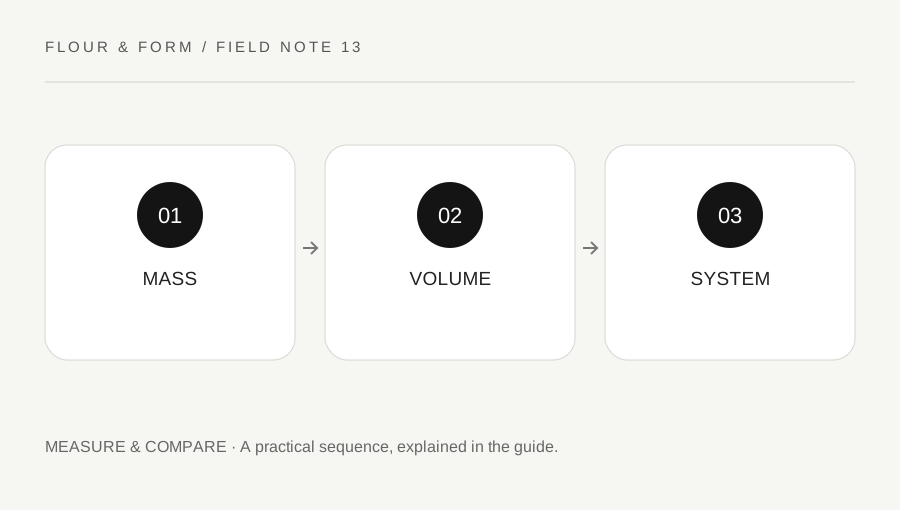
Original explanatory diagram. Examples illustrate a method or decision; they are not claims of personal testing.
Read the complete unit label
A mass ounce measures weight in ordinary kitchen usage, while a fluid ounce measures volume. US and imperial fluid ounces are also different volumes. A recipe saying only ounces can therefore need context, especially if it was copied from a source with mixed conventions.
Check whether the author weighed the ingredient or used a measuring vessel. Keep the original text until the convention is clear. A digital scale displaying oz does not measure a fluid volume merely because the ingredient is liquid.
Use an appropriate mass conversion
NIST's approximate conversion table gives one mass ounce as 28.35 grams. An illustrative 8 ounces by mass is therefore about 226.8 grams using that rounded factor. State the factor's precision rather than reporting an unwarranted long decimal result.
This conversion applies to mass regardless of whether the ingredient is flour, water or another substance. It does not say that 8 fluid ounces of each ingredient weighs the same amount. Volume-to-mass conversion requires an appropriate ingredient-specific relationship or the recipe's verified measurement convention.
Keep volume conversions separate
For a fluid-ounce instruction, identify US or imperial volume and use the relevant volume conversion. Converting that volume into grams then requires density or a suitable ingredient reference. Do not use water as a universal proxy for flour, oil, syrup or chopped ingredients.
Cup and spoon measurements also depend on the stated system and filling method. For a weight-based bread formula, prefer the author's verified gram weights where supplied. If no trustworthy conversion is available, obtain clarification or choose an appropriately documented recipe rather than creating false precision.
Check the scale and spreadsheet
Confirm the scale unit before each weighing session, particularly after someone else has used it. Label spreadsheet columns with both quantity and unit. A column called amount is less clear than mass in grams or volume in millilitres.
Test a simple known conversion before applying a formula to a whole ingredient list. Preserve original values beside converted ones so an error can be traced. Changing a display label does not convert a stored quantity, and multiplying by a mass factor cannot repair a fluid-volume input.
Audit a mixed-unit recipe
Imagine a source listing flour in mass ounces and milk in fluid ounces. Convert the flour with a mass factor and treat the milk as a separate volume question under the correct system. Do not apply one multiplier to both rows simply because the word ounce appears in each.
Record the source, unit system and conversion assumptions with the final formula. This guide explains unit interpretation, not a tested recipe conversion. Accurate quantity types make baker's percentages meaningful, while a missing measurement convention should remain a visible question rather than being hidden by a neat-looking gram total.
When a source mixes abbreviated labels, make a quantity-type column before doing any conversion. Mark mass, volume or count for each ingredient and leave unclear rows unresolved. A 4-ounce mass row converts to about 113.4 grams using the rounded NIST factor; a 4-fluid-ounce row requires a volume system first and cannot use that mass multiplication. Keep the conversion factor in its own labeled cell or note. This makes a spreadsheet review easier because another person can see not only the final grams but also whether the operation was appropriate for the original quantity.
A practical checklist
Choices are saved in this browser. Reset them here or clear this site’s browser storage.
Questions that come up
Does a scale’s oz mode measure fluid ounces?
Not generally. It measures mass. Any special liquid mode needs its own documented assumptions and is not a universal density converter.
Can water’s volume-weight relationship convert every ingredient?
No. Density and measurement method differ. Use a suitable ingredient reference or the recipe’s verified weights.
Why keep the original units?
They make the conversion auditable and help identify whether a wrong quantity type or unit system entered the calculation.
References & scope
Background references checked on 18 October 2026. Worked examples and diagrams are original teaching material.