Keep a Bread Baking Log That Explains What Changed
A good bread log links a formula to what happened in the kitchen. It helps you repeat a success without turning one bake into an unreliable rule.
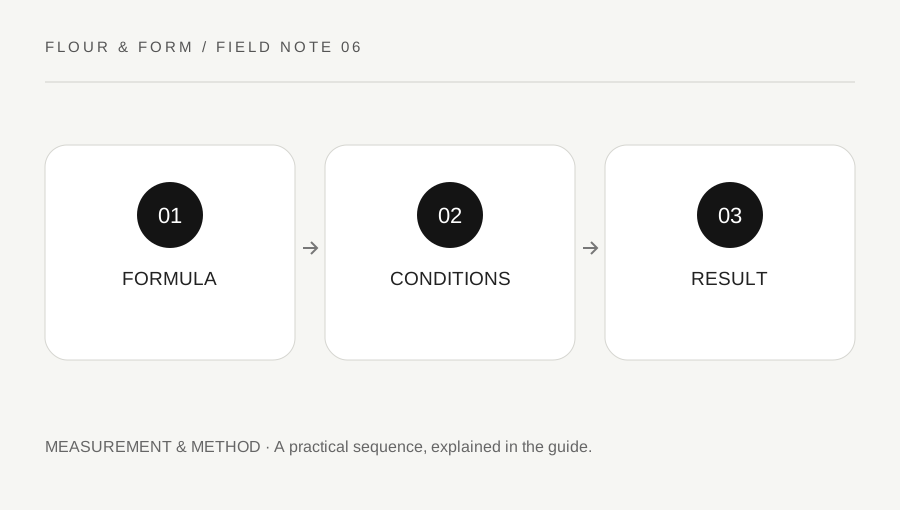
Original explanatory diagram. Numerical examples in this guide illustrate the reasoning; they are not a claim of hands-on testing.
Record the formula and context
Keep the recipe source, ingredient weights and any substitutions together. Add flour type, batch size and the date. If you measure room and dough temperatures, label which is which; those two numbers describe different things.
Write the actual method you followed rather than copying an ideal schedule after the fact. Note when you began mixing, when the dough moved to the next stage and which readiness cues you observed. A recipe clock and the dough in front of you do not always progress at the same rate.
Describe a result you can compare
Photograph the shaped dough and the cooled crumb from similar angles on successive bakes. Record practical observations such as ease of handling, how the dough filled the pan and whether the crumb matched your preference. Avoid relying on a single photograph of the crust to judge every part of the process.
An example note might say, “Same formula; room cooler; dough took longer to reach the recipe’s expansion cue; shaping felt manageable; crumb slightly tighter than last time.” That leaves room for several contributing factors instead of declaring one ingredient responsible without a comparison.
Plan a focused next bake
Choose one question for the next attempt. If you want to compare hydration, hold flour and other variables as steady as practical and calculate the change explicitly. If you want to compare shaping, preserve the formula and document the different handling.
Keep the tested result separate from your expectation. “Next time: try 10 g more water” is a plan, not evidence that the change will improve the loaf. After repeating the adjustment, compare notes and keep a preferred baseline. The log becomes useful because it records uncertainty honestly as well as successes.
Compare two bakes without overstating the result
Create a two-column note for bake A and bake B. Include formula, flour, actual ingredient weights, room conditions, dough temperature if measured, major process observations and your result. Mark deliberate changes separately from accidental differences.
Suppose B contains 10 g more water but was also made in a warmer room and shaped differently. A more open crumb cannot be attributed confidently to the water alone. Write “several variables changed; result worth repeating” instead of declaring the hydration adjustment a proven fix. That note is more useful because it tells you how to design the next comparison.
Choose the most relevant result for your purpose. A loaf intended for sandwiches may be judged by slice strength and evenness rather than dramatic holes. A shaped roll may need a different assessment from a pan loaf. Keep the intended use alongside the photographs so you do not chase a visual result that makes the bread less useful to you. The log should help you repeat an appropriate outcome, with enough honesty to recognize what the comparison did and did not show.
A practical checklist
Tick items for your own use. This checklist is saved only in this browser.
Questions that come up
Does a fixed timetable guarantee the same loaf?
No. Conditions and ingredients vary. A timetable is useful context alongside the recipe’s readiness cues.
Should every note include a photograph?
A photograph can help, but a concise written observation is still useful. Keep conditions and stages comparable when using images.
Can one successful bake establish a rule?
Treat it as a promising result. Repetition under similar conditions gives you more confidence than a single comparison with several changing variables.
References & scope
Background references checked on 18 October 2026. The examples and practice exercises are original editorial explanations, not copied procedures or professional advice.