Weigh Baking Ingredients: A Clear Routine for Accurate Batches
A consistent weighing routine removes avoidable uncertainty. The useful skill is not just reading the display, but knowing which ingredient and unit it represents.
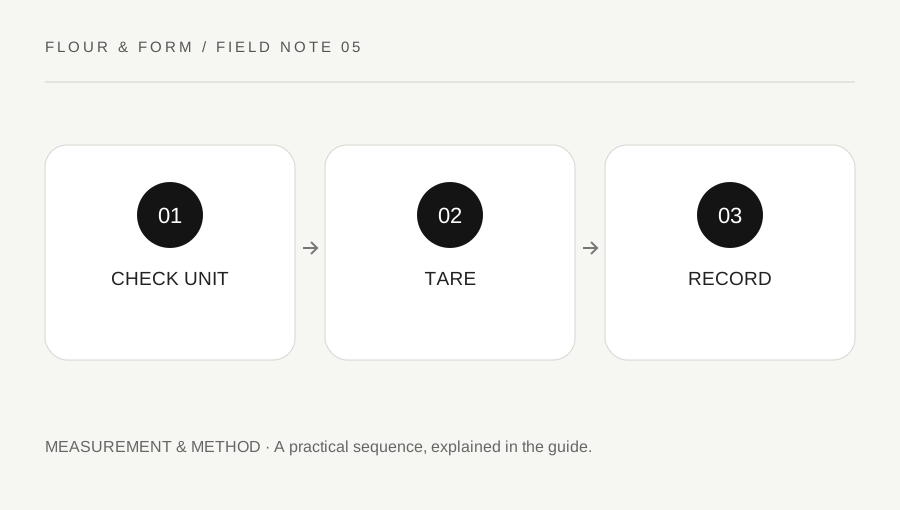
Original explanatory diagram. Numerical examples in this guide illustrate the reasoning; they are not a claim of hands-on testing.
Set the scale up well
Put the scale on a stable, level surface and check that its capacity can handle the bowl plus the ingredients. Select grams if the recipe is written in grams. A display that unexpectedly switches to ounces can turn a correct-looking number into an incorrect quantity.
Place the empty bowl on the scale and tare it. Add the first ingredient slowly as you approach the target. For ingredients where an overshoot is difficult to correct, weigh separately before combining. Keep water away from the electronics and follow the scale manufacturer’s care instructions.
Choose a volume conversion carefully
If the original recipe gives a weight, use it. If it gives only cups, use the recipe author’s own conversion if available. Flour type and the way a cup is filled affect the result, so a single cups-to-grams factor cannot apply to every ingredient.
For reference, King Arthur lists 120 g for a cup of its all-purpose flour, while noting that recipe-specific weights can differ. That does not mean every cup of every flour weighs 120 g. Record the conversion used and avoid switching between two conventions midway through one formula.
Protect small quantities and your notes
Check the resolution of the scale for salt, yeast and other small quantities. A scale that displays whole grams cannot reliably distinguish every fraction of a gram. Choose a practical batch or appropriate equipment rather than pretending the display supports precision it does not have.
Create a written ingredient list and mark each addition. A tare button can hide how much was previously added, so the list becomes your audit trail. Before mixing, check that you used the intended unit, ingredient and quantity. This brief pause is often more useful than trying to correct a dough after an uncertain measurement.
Use a separate bowl when a mistake is costly
Imagine adding salt directly to a bowl that already contains all the flour. If you overshoot, removing an exact amount of salt from the mixture is difficult. Weighing a small ingredient separately makes correction easier before it is combined. The same approach can help with an ingredient that pours unpredictably.
Set the empty small bowl on the scale, tare, add the ingredient and check the display. Confirm the unit and the intended ingredient before adding it to the main mixture. Mark the item on your written list immediately. If you are interrupted, the marked list tells you where to resume without guessing from the appearance of the bowl.
Capacity also matters. A heavy mixing bowl plus a large flour quantity may exceed a scale’s limit even if the ingredient amount alone appears acceptable. Check the manufacturer specification and split weighing into suitable portions when necessary. Do not assume the tare function increases the physical capacity of the scale. A repeatable weighing routine is a sequence of checks, not simply the presence of a digital display on the worktop.
A practical checklist
Tick items for your own use. This checklist is saved only in this browser.
Questions that come up
Can I use one conversion for flour, sugar and butter?
No. Different ingredients have different densities and measuring conventions. Use ingredient-specific or recipe-specific weights.
Does tare increase the scale’s maximum load?
No. The bowl and all ingredients still contribute to the physical load. Check the manufacturer capacity.
What if I forget whether an ingredient was added?
Pause and reconstruct the process from your written record. Do not add a second quantity solely because it is not visually obvious in the bowl.
References & scope
Background references checked on 18 October 2026. The examples and practice exercises are original editorial explanations, not copied procedures or professional advice.