Calculate a Flour Blend Without Changing the Total Flour
A flour blend divides one total flour amount among several flours. The individual shares should add to one hundred percent before water or other ingredients are considered. Keep that blend calculation separate from predictions about dough feel or baking performance.
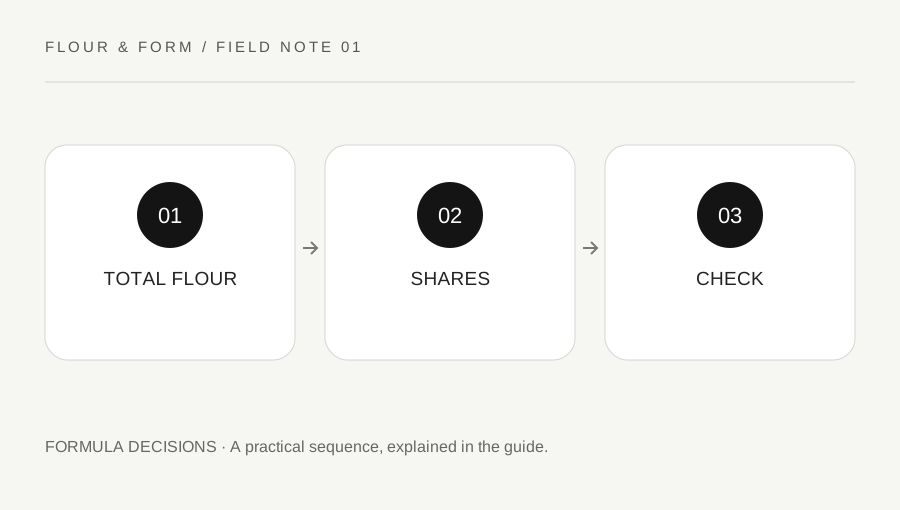
Original explanatory diagram. Examples illustrate a method or decision; they are not claims of personal testing.
Define the denominator once
Choose the total flour weight for the formula, including flour carried in any starter or preferment. Treat that total as one hundred percent. Each flour's blend share is its weight divided by the total flour weight. Water, salt and inclusions do not belong in this denominator.
If the formula contains more than one stage, record the flour in each stage before deciding the overall blend. A final-mix list can appear to contain only white flour while a whole-grain preferment changes the actual total. Counting the complete formula prevents that hidden mismatch.
Work through a two-flour blend
For an illustrative total of 600 grams flour, a seventy-percent bread-flour share is 420 grams and a thirty-percent whole-wheat share is 180 grams. The two weights sum to 600 grams and the two percentages sum to one hundred. These numbers describe arithmetic, not a tested bread recipe.
If a preferment already supplies 60 grams of whole-wheat flour, that amount counts toward the 180 grams. The final mix would then need 120 grams more whole-wheat flour, assuming the other stage details remain as stated. Do not add the preferment flour again after allocating the full blend.
Change the blend without changing the batch accidentally
To compare a different blend at the same flour total, redistribute the flour shares rather than adding a new flour on top. A ten-percentage-point change in a 600-gram total moves 60 grams from one flour category to another. It does not mean adding ten percent of the entire dough weight.
Keep the recipe's other assumptions visible. Different flours can change absorption, handling and fermentation behavior, so identical numerical hydration does not guarantee identical dough feel. Use an appropriate verified recipe or a clearly documented experiment rather than assuming the arithmetic validates an unchanged process.
Use a blend table in the kitchen
Create columns for flour type, target total, preferment contribution and final-mix addition. Check that each row's stage contributions equal its target and that all targets sum to the full flour amount. This table is especially useful when more than one preferment or flour is involved.
Keep product identity with the table. Two bags called bread flour can differ, and a flour label is not a complete performance measurement. Record actual observations only after a real bake. Do not describe the proposed blend as personally tested or promise a particular crumb from the percentage alone.
Audit a three-stage example
Suppose the 600-gram flour total includes 100 grams in one preferment, 50 grams in another and 450 grams added at final mixing. Before allocating a blend, identify the flour type in each of those stages. Their weights are parts of the same total, not three separate one-hundred-percent bases for the overall formula.
You may also keep stage-specific percentages, but label them clearly. A preferment can have its own local formula while still contributing flour to the overall calculation. Write overall blend above the master table and stage formula above any separate build. This distinction lets another baker reproduce the arithmetic without guessing which denominator each percentage uses.
A practical checklist
Choices are saved in this browser. Reset them here or clear this site’s browser storage.
Questions that come up
Does thirty percent whole wheat mean thirty percent of dough weight?
Not in a flour-blend statement. It means thirty percent of total flour weight. State the denominator whenever a percentage might be ambiguous.
Do I count flour in starter?
Yes, in the overall flour total and blend. Calculate the starter’s flour contribution from its documented hydration and composition.
Will the same hydration feel the same after changing flour?
Not necessarily. Flour properties and the process matter. The blend calculation does not validate an unchanged recipe or guarantee a particular dough feel.
References & scope
Background references checked on 18 October 2026. Worked examples and diagrams are original teaching material.