Dough Weight and Cooled Loaf Weight: Calculate Yield Without Promising a Fixed Loss
A dough piece and its cooled baked loaf can weigh different amounts. Measuring that change helps describe an actual bake, but one percentage is not a universal prediction. Keep the weighing stage, units and observed conditions clear.
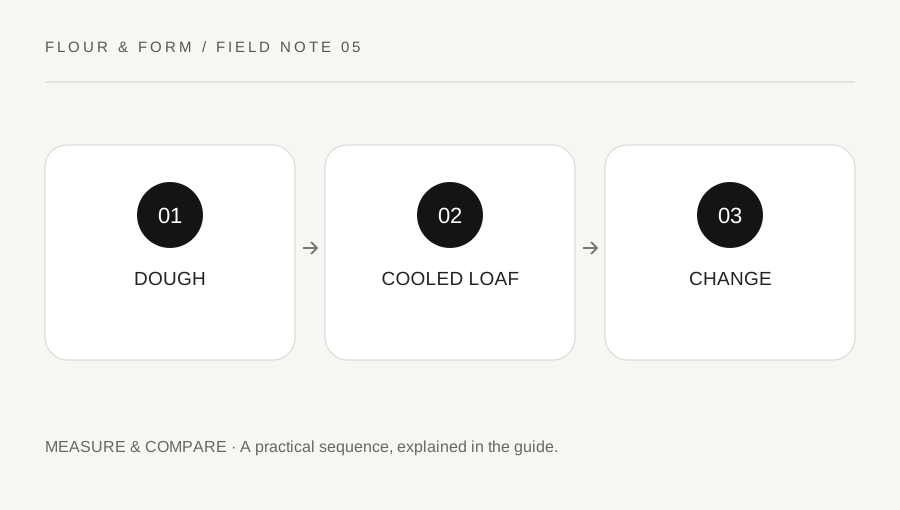
Original explanatory diagram. Examples illustrate a method or decision; they are not claims of personal testing.
Choose consistent weighing stages
Record the dough weight at a stated stage, such as the shaped piece before proofing, and the loaf weight after a consistent cooling stage. Do not compare a hot loaf from one bake with a fully cooled loaf from another without noting the difference. Use a suitable scale and safe handling around hot equipment.
Keep pan, liner and container weights out of the food measurement by using an appropriate tare procedure. If material is left in a bowl or cut away during shaping, record that separately. Otherwise the apparent baking change can include preparation losses that occurred before the loaf entered the oven.
Work through a simple observation
An illustrative dough piece weighs 800 grams at the chosen stage and its cooled loaf weighs 680 grams. The observed mass decrease is 120 grams. Relative to the starting dough, the decrease is 120 divided by 800, or fifteen percent. The cooled yield is eighty-five percent of that recorded dough weight.
These are example numbers, not a promised result for a recipe. The change can reflect moisture and other process losses, but a household scale record alone does not identify every component. Do not label the entire difference as a precise chemical water measurement without the appropriate analysis.
Keep portion planning separate
If you want a particular cooled loaf weight, an observed yield from a genuinely comparable process can inform an estimate. State the assumption. With an illustrative eighty-five-percent yield, a 680-gram cooled target corresponds to 800 grams dough under that assumed relationship.
A changed shape, formula, baking method or cooling stage can invalidate the estimate. Do not increase dough beyond the pan or equipment's supported capacity merely to chase a finished weight. Use the verified recipe and suitable pan guidance, then compare actual results after baking.
Record the conditions that affect comparison
Keep formula identity, dough-piece size, pan, baking method and cooling stage with the weights. A small roll and a large loaf have different geometry and should not be treated as interchangeable examples. Do not claim that one observed percentage establishes the correct loss for every bread.
If a result changes, inspect whether the weighing stage or tare procedure changed before attributing it to the recipe. A wet towel under a scale container or a forgotten pan weight can create a larger apparent effect than the ingredient change you intended to study.
Make a repeatable yield sheet
Use columns for date, dough-stage description, net dough weight, cooled-stage description, net loaf weight and calculated change. Leave unknown conditions marked unknown. Keep original readings rather than replacing them with rounded values before calculating.
After several genuine comparable bakes, summarize the observed range with its conditions instead of promising an exact future percentage. This is a household process record, not a laboratory validation. It can improve portion planning and reveal inconsistent measurement while preserving the role of a verified baking method and actual doneness guidance.
If several loaves share one batch, weigh them individually at the same stage before summing. Differences in portioning can otherwise be mistaken for differences in baking loss between the loaves.
A practical checklist
Choices are saved in this browser. Reset them here or clear this site’s browser storage.
Questions that come up
Is the whole weight decrease pure water?
A simple household weight comparison does not identify every component of the loss. Report the observed mass change without claiming a precise composition analysis.
Can I use one yield percentage for every loaf?
No. Formula, shape, size, process and cooling stage can differ. Use only a clearly labeled estimate from a genuinely comparable record.
Should I weigh bread on a hot pan?
Follow scale and kitchen safety instructions. Keep the measurement stage consistent and avoid exposing unsuitable equipment to hot cookware.
References & scope
Background references checked on 18 October 2026. Worked examples and diagrams are original teaching material.